
The “International Mecelle Symposium (Codification, Implementation, and Its Contemporary Effects)”, organized by the Justice Academy of Turkey and supported by the Bursa Metropolitan Municipality, was held in Bursa between September 25-27, 2017. The opening speeches were delivered by Deputy Prime Minister Hakan Çavuşoğlu, Minister of Justice Abdülhamit Gül, and First President of the Court of Cassation İsmail Rüştü Cirit. In their opening remarks, the speakers emphasized the importance of the Mecelle in legal history, highlighting that it is essential for all legal professionals to understand and internalize it. Furthermore, hopes were expressed that this symposium would serve as a foundation for future research on the Mecelle.
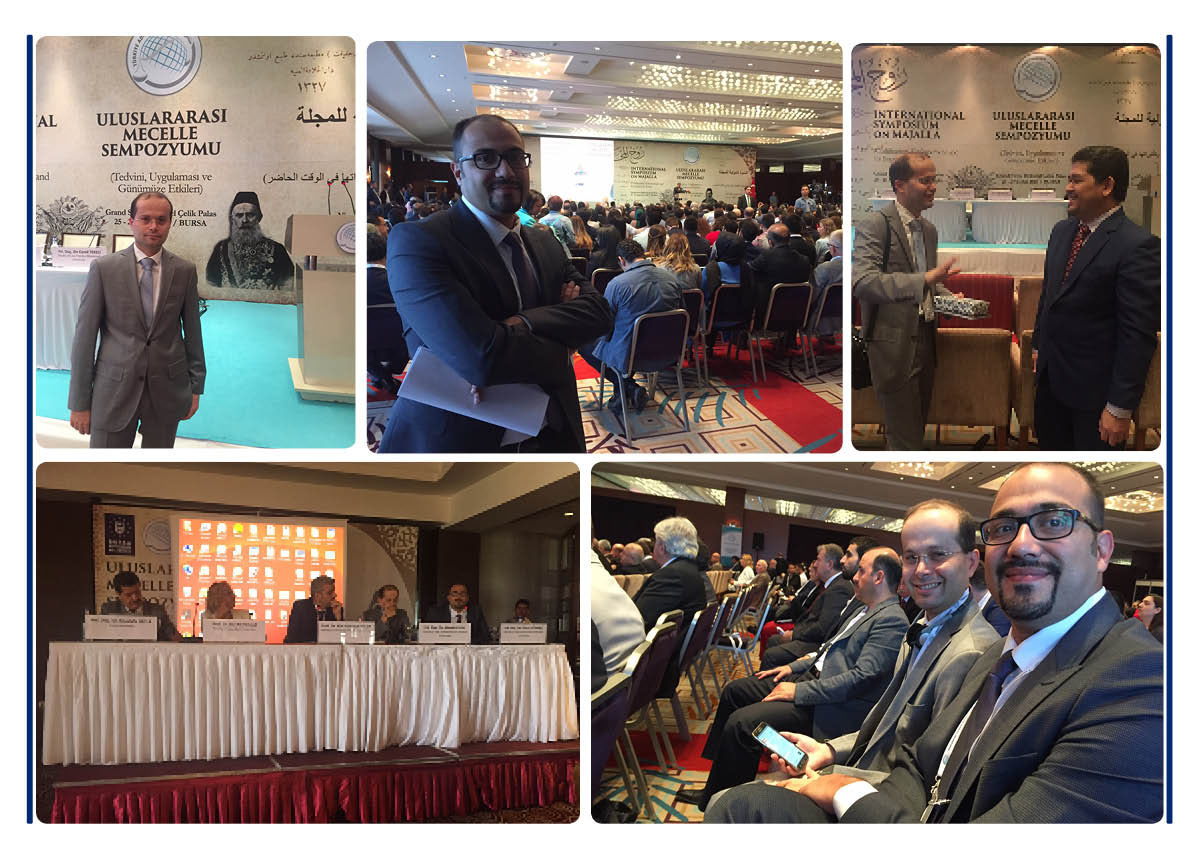
In addition to Deputy Prime Minister Hakan Çavuşoğlu, Minister of Justice Abdülhamit Gül, and First President of the Court of Cassation İsmail Rüştü Cirit, the symposium was attended by the Chairman of the Constitutional Committee of the Grand National Assembly of Turkey Mustafa Şentop, Governor of Bursa İzzettin Küçük, members of parliament, presidents of high courts from Jordan and Oman, public prosecutors, and scholars. The symposium, which featured 60 speakers from 14 different countries, saw significant participation.
During the second session of the first day in the Ali Haydar Efendi Hall, Asst. Prof. Dr. Ahmet Kılınç, Vice Dean of the AYBÜ Faculty of Law and faculty member in Legal History, and Asst. Prof. Dr. Ünsal Dönmez, Vice Dean of the AYBÜ Faculty of Law and faculty member in Civil Law, presented their papers. In his presentation titled “Statute of Limitations According to the Mecelle: Malfunctions Observed in Practice and Suggested Solutions,” Kılınç detailed the provisions regarding the statute of limitations established in the Mecelle. Shedding light on practical challenges in light of information obtained from archival documents, Kılınç provided an analysis of the practical implications. In his paper titled “Examination of the Mecelle and Contemporary Codes in Terms of Comparative Legal Technique,” Dönmez compared the Mecelle with the civil codes of contemporary states such as France, Germany, Italy, and Austria. Stating that the Mecelle was the “beginning of a living legal system,” Dönmez highlighted the immense value of the Mecelle in the history of Turkish private law.